The words sounded the same as they always had.
“You’re free to go.”
They echoed through the courtroom with quiet authority, the kind of phrase people expect to carry relief, hope, even joy. For most, it marks the end of something heavy and the beginning of something new.
But for the men standing there that day—
It felt like stepping into nothing.
No applause.
No smiles.
No sense of victory.
Just silence.
Because freedom, after a lifetime behind bars, didn’t feel like freedom at all.
It felt like being released into a world that had already moved on without them.
Mr. Keller stood first.
Slowly.
Carefully.
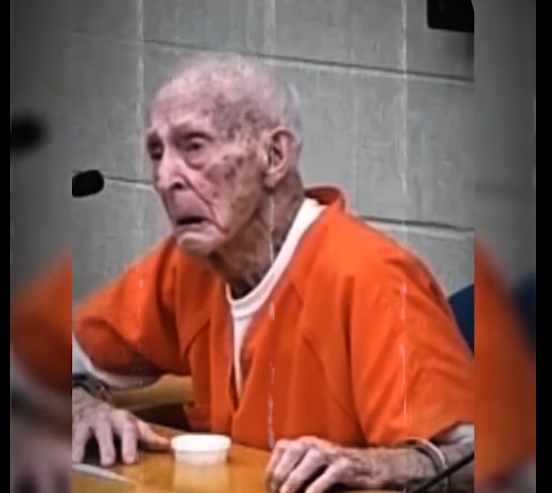
His hands rested on the edge of the table for a moment, as if he needed something solid to hold onto before stepping forward. At seventy-eight years old, his body carried the weight of nearly six decades spent inside prison walls.
He had entered at eighteen.
A teenager.
Young.
Unfinished.
With a life still waiting to happen.
And now—
He was leaving as an old man.
The courtroom doors opened.
But instead of possibility—
There was uncertainty.
“I don’t know how to be this old out there,” he said quietly.
His voice wasn’t broken.
It was honest.
Because the world he remembered no longer existed.
The streets had changed.
The language had changed.
The way people lived, communicated, even thought—
All of it had transformed into something unfamiliar.
Technology alone felt like another planet.
Phones without buttons.
Cars that spoke.
A world that moved faster than anything he had ever known.
And he was expected to step into it—
Like he belonged.
But he didn’t.
Not anymore.
Another man stood beside him.
Different face.
Same story.
Sixty-two years behind bars.
A lifetime measured not in experiences—
But in days survived.
He didn’t look at the judge.
He looked at the floor.
Because the words “free to go” didn’t land the way people thought they would.
“I’m not scared of being out,” he said quietly.
A pause.
“I’m scared of what’s not there anymore.”
His family had moved on.
Not out of cruelty.
Out of time.
Children who once needed him had grown into adults without him. They built lives, formed memories, became people he no longer recognized.
“I have their last name,” he said. “But I don’t have their lives.”
The sentence carried more weight than anything written in law.
Because it wasn’t about prison anymore.
It was about identity.
Who do you become when the world you knew disappears?
Where do you go when there’s no one waiting?
The courtroom didn’t have answers.
It never did.
It could deliver judgment.
It could define consequences.
But it couldn’t restore time.
It couldn’t rebuild relationships.
It couldn’t return lost moments.
Birthdays missed.
Conversations never had.
Simple memories that shape a life—
Gone.
For decades, these men had survived inside a system with structure.
Rules.
Routine.
Predictability.
Every day followed the same rhythm.
Wake up.
Eat.
Work.
Wait.
Sleep.
Repeat.
It wasn’t freedom.
But it was something.
And now—
That structure was gone.
Replaced by something far more difficult.
Choice.
Because freedom means decisions.
Endless ones.
Where to go.
What to do.
Who to trust.
How to live.
Things most people learn slowly over a lifetime.
They had to learn all at once.
At seventy.
At eighty.
With no guide.
No map.
No starting point.
One man described it simply.
“In there, I knew who I was,” he said. “Out here… I don’t know yet.”
The words stayed in the room long after he spoke them.
Because they revealed something most people never think about.
Prison doesn’t just take time.
It takes identity.
And when someone spends more years behind bars than outside them—
Freedom can feel like exile.
Not because it’s unwanted.
But because it’s unfamiliar.
The doors of the courtroom opened.
One by one, they stepped out.
Not into celebration.
But into a world that didn’t recognize them.
Cars passed by without slowing.
People walked past without noticing.
Life continued.
Uninterrupted.
Because to the world—
They were just strangers.
Men without context.
Without history anyone could see.
But inside them—
Lived entire lives that had never fully happened.
Dreams paused at eighteen.
Goals that never had a chance to grow.
Plans that existed only in memory.
And now—
They had to decide what came next.
At an age when most people look back on their lives—
They were being asked to start over.
The system had done its part.
The sentence was complete.
The debt, in the eyes of the law, had been paid.
But something remained.
Something no courtroom could address.
Belonging.
Because freedom without belonging feels incomplete.
It feels distant.
Like standing in a place you should recognize—
But don’t.
And as the doors closed behind them, leaving the courtroom quiet once again, one question lingered.
Unanswered.
Unresolved.
Where do you go…
When the life you were meant to live has already passed
And the world waiting outside no longer feels like yours
Because sometimes
The hardest part isn’t losing your freedom
It’s learning how to live again once it’s returned
About the Author