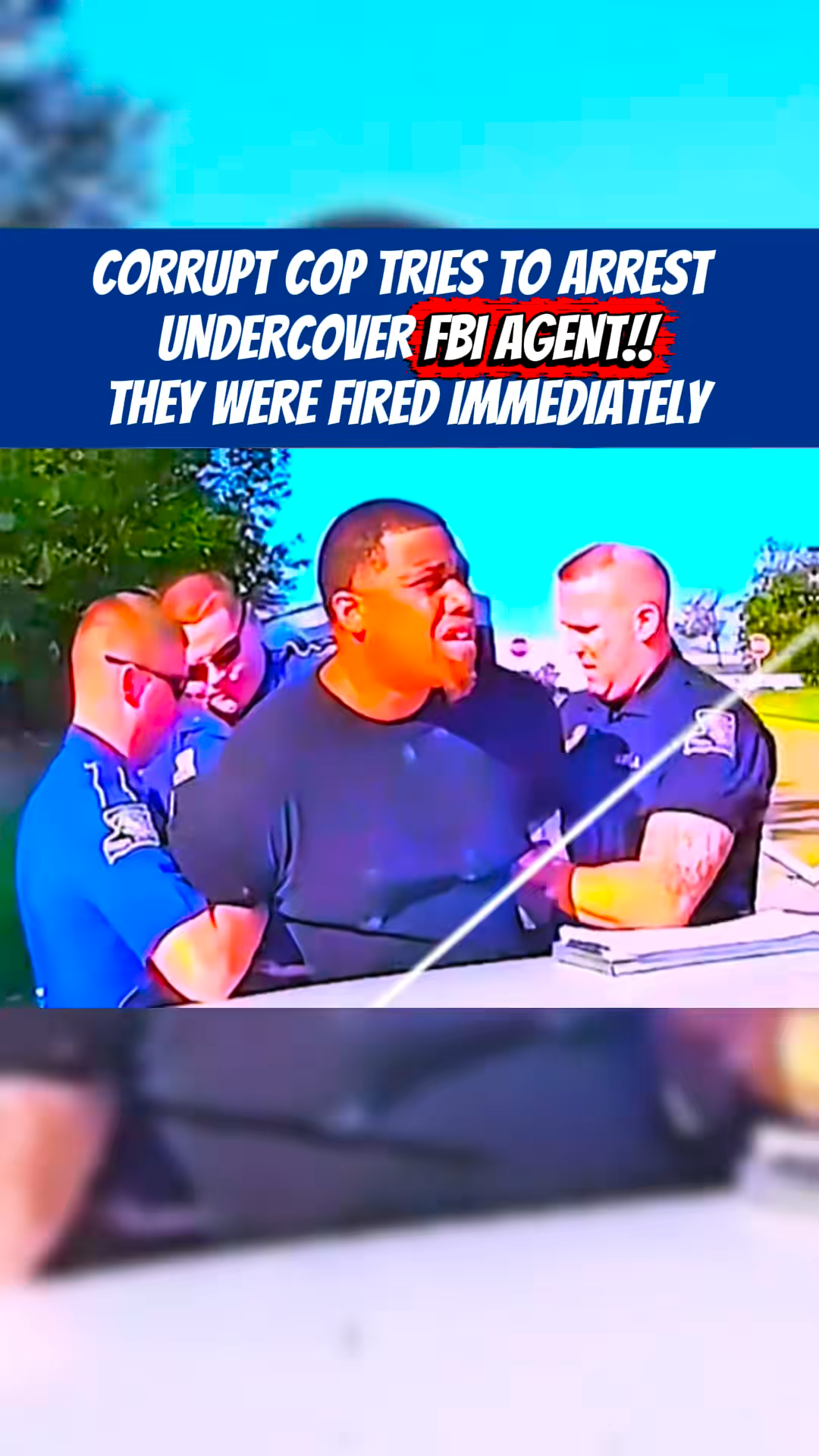
What began as a seemingly ordinary traffic stop escalated quickly when an officer ordered a driver to place his hands behind his back, warning that a taser would be used if he didn’t cooperate.
The driver tried to de-escalate, saying “Please…” as tensions rose — but the officer had no idea who he was dealing with. The man behind the wheel wasn’t a typical motorist at all, but an undercover federal agent working a completely separate operation.
Once the truth eventually surfaced, the situation changed instantly. Supervisors arrived, the atmosphere flipped, and disciplinary action followed rapidly — a major fallout triggered by a misunderstanding that never should have reached that point.
Before the officer learned the driver’s identity, he shifted between harsh commands and forced politeness, at one point presenting a consent-to-search form. “Read this so you know what I’m asking,” he said, repeating that signing was optional while still applying clear pressure. The agent, who remained composed to avoid blowing his cover, listened as the officer tried to walk him through each line of the document.
The interaction swung wildly in tone: threats of a taser one moment, then assurances of “just a warning” and “no fines” the next. The officer’s inconsistent approach appeared aimed at pushing the driver into compliance — a tactic that quickly unraveled once higher authorities became aware of whom they had actually stopped.
The encounter later served as a dramatic reminder of the consequences of mishandled policing tactics. It illustrated how quickly a routine stop can go off the rails when communication, restraint, and professionalism break down.
What started as a simple pull-over ended with federal involvement, disciplinary measures, and a powerful lesson: officers don’t always know who they’re interacting with — and heavy-handed tactics can backfire in unexpected ways.
About the Author