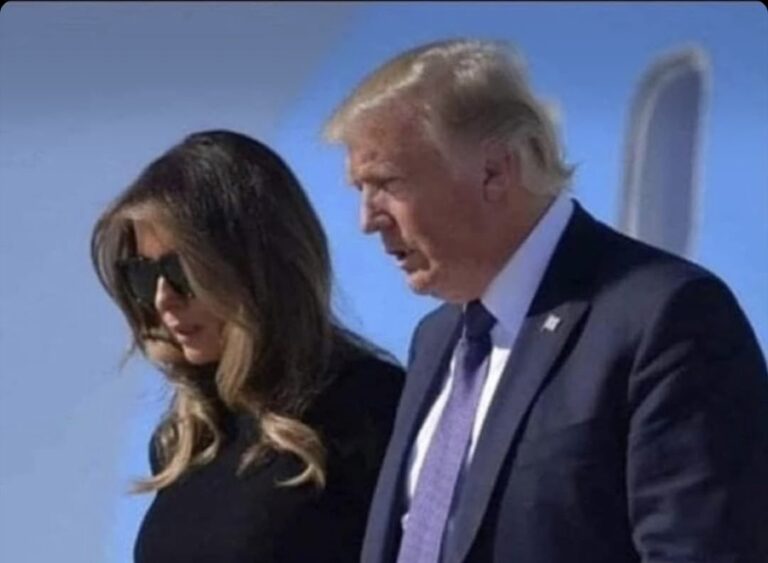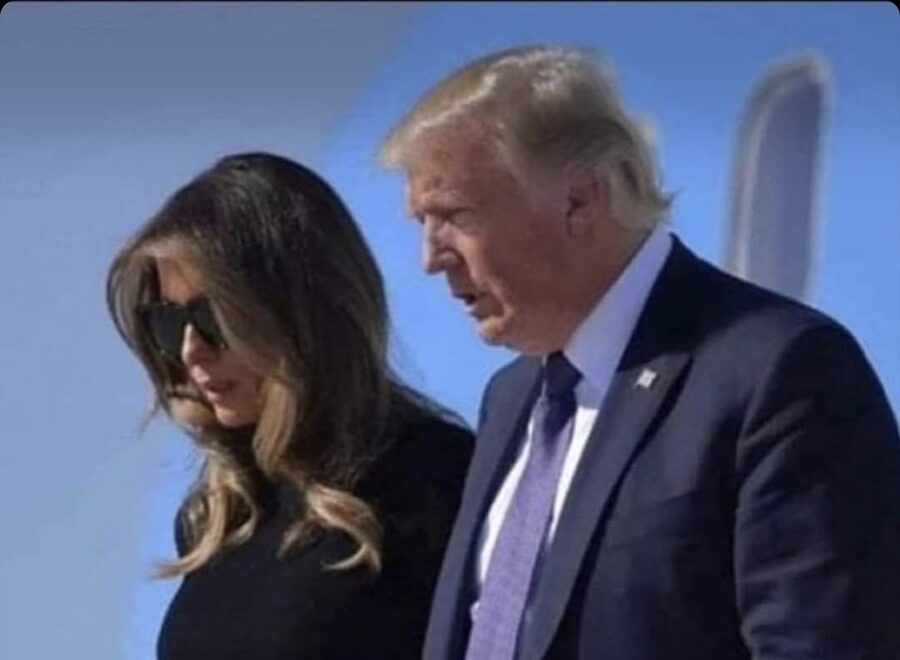
A recent wave of viral posts has pushed Donald Trump back into the center of global attention, but this time not for a policy statement or rally headline.
Instead, it’s an alleged emotional moment—one that may or may not have happened as described—that has ignited intense discussion across social media and news platforms alike.
According to circulating claims, Trump appeared visibly emotional during a public address, delivering remarks that some viewers interpreted as unusually personal and heartfelt.
The reports describe a scene that stands in stark contrast to the confident and often combative tone that has defined much of his public image over the years. That contrast is precisely what fueled the rapid spread of the story.
What makes this narrative particularly compelling is not just the content of the alleged moment, but how quickly it resonated.
In a political landscape where figures are often seen through rigid lenses, any perceived shift—especially one involving vulnerability—tends to capture attention immediately.
For supporters, the idea of such a moment adds depth and relatability. For critics, it raises questions about context, timing, and authenticity.
Despite the intensity of the reactions, there remains a critical detail: the claims themselves are largely unverified. No widely confirmed footage or reliable reporting has fully substantiated the more dramatic versions of the story.
This hasn’t stopped the narrative from spreading, however. In fact, the lack of clear confirmation has only fueled further speculation, with users interpreting fragments of information in vastly different ways.
Social media platforms played a central role in amplifying the discussion. Within hours, posts referencing the alleged moment began circulating widely, accompanied by commentary that ranged from emotional support to outright skepticism.
Some users described feeling surprised or even moved by the idea of a powerful political figure showing vulnerability in public. Others questioned whether the story had been exaggerated or taken out of context.
This rapid polarization reflects a broader pattern in how digital audiences engage with political content. Rather than waiting for full verification, many users react in real time, shaping the narrative as it unfolds.
In doing so, they contribute to a feedback loop where speculation and interpretation can become just as influential as confirmed facts.
Media analysts have urged caution in responding to stories like this.
They emphasize that emotionally charged narratives are particularly prone to distortion, especially when shared at high speed across multiple platforms. Without clear sourcing or verified footage, it becomes increasingly difficult to distinguish between what actually happened and what has been constructed through online discussion.
The situation also highlights a deeper issue: the evolving nature of public perception in the digital age. Political figures are no longer defined solely by official statements or traditional media coverage.
Instead, their image is constantly shaped and reshaped by viral moments—some real, others exaggerated, and some entirely speculative. In this environment, a single claim can take on a life of its own, influencing opinions long before the full story emerges.
Interestingly, the conversation has moved beyond the alleged moment itself. It has become a broader reflection on how people interpret leadership, strength, and emotion.
For some, the idea of vulnerability in a leader is seen as humanizing. For others, it is viewed with suspicion, especially when the circumstances are unclear.
These differing perspectives reveal as much about the audience as they do about the figure at the center of the story.
There is also a growing awareness of how easily narratives can be shaped by selective framing. A short clip, a single quote, or even a misleading caption can dramatically alter how an event is perceived. When these elements are shared repeatedly, they can create a version of reality that feels convincing, even if it lacks a solid factual foundation.
In the case of Donald Trump, the intensity of public interest only magnifies this effect. As one of the most recognizable and polarizing figures in modern politics, any unusual moment—real or rumored—has the potential to dominate headlines and social feeds within minutes. This makes him a particularly powerful example of how quickly narratives can spread and evolve.
Ultimately, the story serves as a reminder of the importance of critical thinking in the digital era. While it’s natural to react to compelling or emotional content, taking a step back to verify information can make a significant difference in how accurately events are understood. The speed of modern communication may be unprecedented, but the need for careful interpretation remains as relevant as ever.
Whether the alleged moment proves to be accurate, exaggerated, or entirely misunderstood, its impact is already clear. It has sparked conversation, revealed divisions in perception, and demonstrated just how quickly a single narrative can capture global attention. In a world where information moves faster than ever, stories like this don’t just reflect reality—they actively shape it.
About the Author