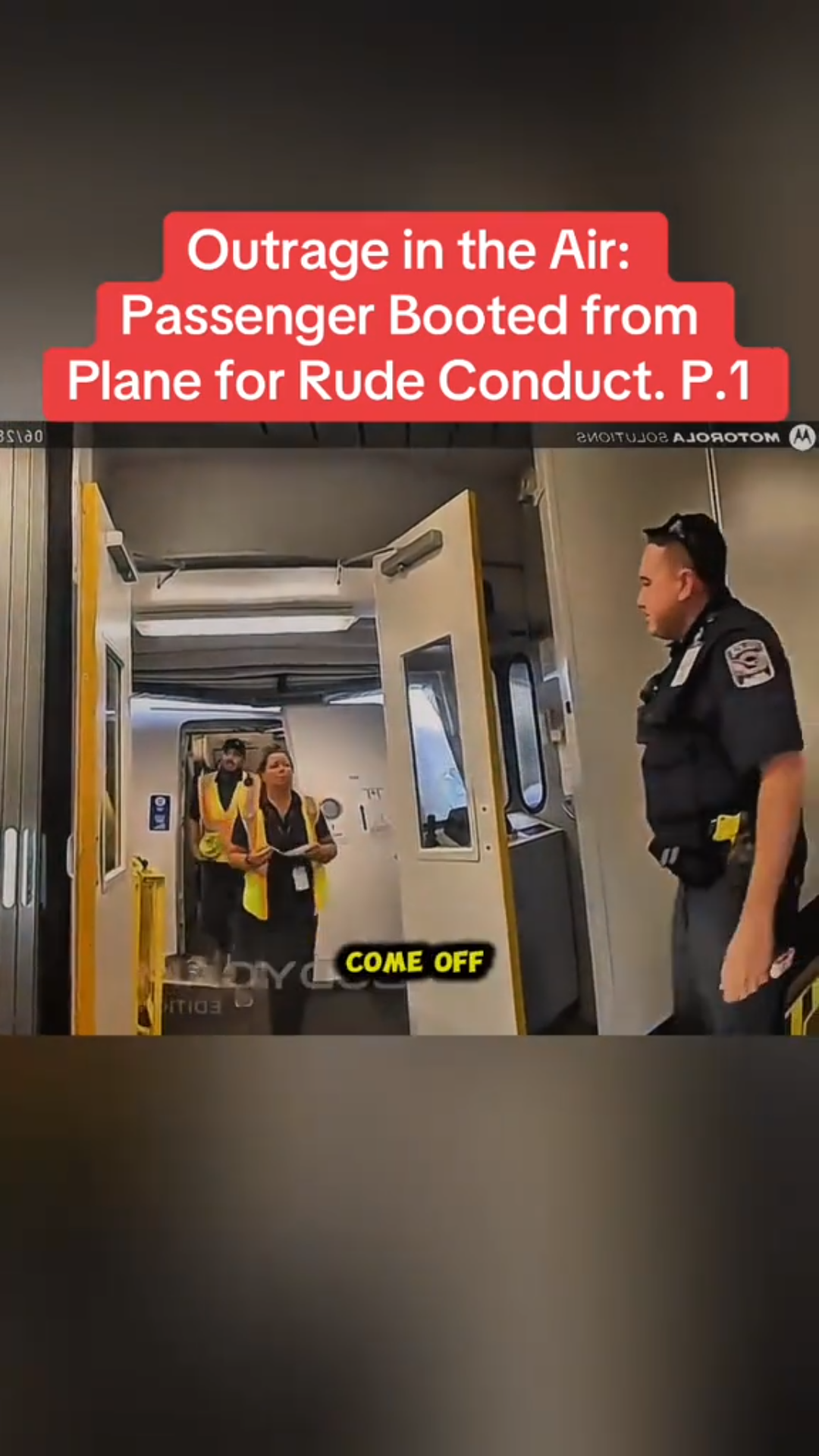
What should have been an ordinary pre-departure routine took a sharp turn before the plane even pushed back from the gate.
Passengers were in their seats. Overhead compartments were closing. The cabin crew’s safety messages played as the last travelers settled in. That’s when one flyer’s behavior started drawing uneasy glances.
Raised volume. Snappy remarks. Refusal to comply with simple directions from the crew.
At first, people tried to brush it off. But the longer it continued, the harder it became to ignore. The passenger allegedly got into a heated exchange with a flight attendant over seating arrangements and carry-on rules, their tone growing more heated with each back-and-forth.
Heads began to turn. Cell phones were lifted. Quiet murmurs spread through the cabin.
And then the situation escalated.
The captain halted the departure. Security and airport officers were summoned, and soon they boarded the aircraft. The atmosphere shifted instantly — annoyance giving way to disbelief as they made their way down the aisle.
The disruptive passenger protested loudly, claiming innocence — though several nearby travelers recounted a very different version of events.
After a brief confrontation, the individual was removed from the plane.
A few passengers applauded. Others sat frozen in surprise.
A situation that could have turned into a mid-air crisis was resolved on the ground. Still, the incident caused delays and disrupted travel plans, leaving frustration, questions, and one lingering thought:
When does difficult behavior cross the line into removal?
For everyone on that flight, it was more than an inconvenience — it was a reminder that at cruising altitude, cooperation isn’t optional.
About the Author